



MG Link operates within the construction sector and is committed to promoting sustainable development – environmentally, socially, and economically. We adhere to international guidelines, including the ten fundamental conventions of the International Labour Organization (ILO), the UN Universal Declaration of Human Rights, and Article 32 of the UN Convention on the Rights of the Child. We are also committed to complying with applicable labor and environmental legislation in the countries where we operate.
Through this policy, we work to create a fair workplace, ensure the protection of children, and minimize our environmental impact. The policy applies to all employees, subcontractors, and other partners involved in our projects.
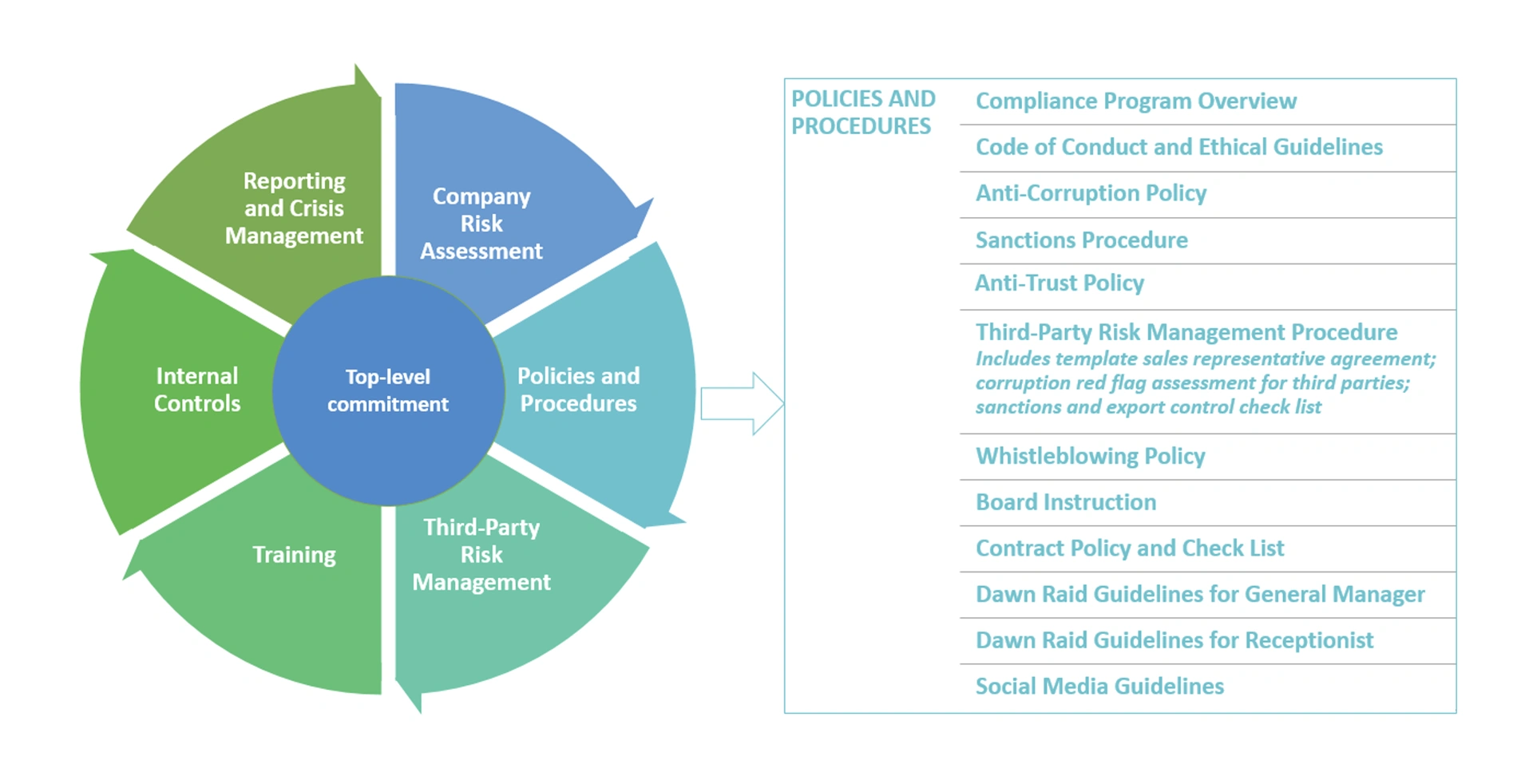
MG Link the “Company”is committed to conduct business in compliance with all applicable laws and regulations, and with the highest ethical standards and integrity. MG Link’s compliance program is setting out our key internal processes and procedures to manage risks inter alia related to corruption, money laundering and terrorist financing, sanctions, export controls and anti-trust. Our compliance program is implemented on a risk-based approach and comprises the following elements and underlying policies and procedures:
1. Reduced construction costs:
Prefabrication means that building modules are manufactured in a controlled factory environment, minimizing material waste and optimizing the construction process. This streamlines the production chain and reduces unnecessary costs that may arise on-site, for example due to errors or delays. Factory production also enables larger procurement volumes, which can lower material costs.
2. Efficient resource utilization through circular construction:
Our modules are designed for easy disassembly and reuse in new projects, creating a circular process that reduces long-term costs. Reusing modules across multiple projects eliminates the need to construct new structures for each individual project, saving both materials and labor. This minimizes costs related to material procurement and waste management.
3 – Lower labor costs:
Since the modules are prefabricated, the construction process requires significantly fewer on-site labor hours. Assembly of prefabricated modules is faster than traditional construction, resulting in less disruption to surrounding activities. In addition, projects can generally be completed more quickly, reducing labor requirements and enabling a faster return on investment.
4 – Reduced operating and maintenance costs:
As the timber modules are manufactured with high precision in a factory environment, they consistently achieve high quality and require less maintenance over time. This lowers maintenance expenses and improves the building’s lifecycle cost performance. Our timber modules are energy-efficient and can contribute to lower operating costs compared to many existing facilities today.
5. Lower total cost through flexibility and reuse:
Prefabricated and reusable timber modules provide flexibility that can reduce long-term costs. Since the modules are designed for easy reconfiguration or reuse, adapting buildings over time becomes more cost-effective. For example, a building can quickly be modified to meet new needs without requiring large amounts of new materials or resources – making the solution both economical and sustainable.
Certification and Policy
MG Link is certified in accordance with ISO 9001, 14001, and 45001 in the areas of quality, environmental management, and occupational health and safety. ISO certification places clear requirements on us as an organization and includes, among other things:
Structured and efficient processes – Documented routines and working methods that comply with the standards.
Annual audits and compliance – Independent certification bodies that verify compliance with the standards each year.
Continuous improvement – At MG Link, we not only strive to continuously improve; it is also a requirement to maintain our certification.
Read our policy document here
By building with prefabricated and reusable timber modules, you achieve a cost-effective, sustainable, and circular construction process.
This approach reduces both initial and long-term costs, creating added value for clients and society through lower resource and energy consumption.